Understanding Sun Spots: Causes, Prevention, and Specific Treatments

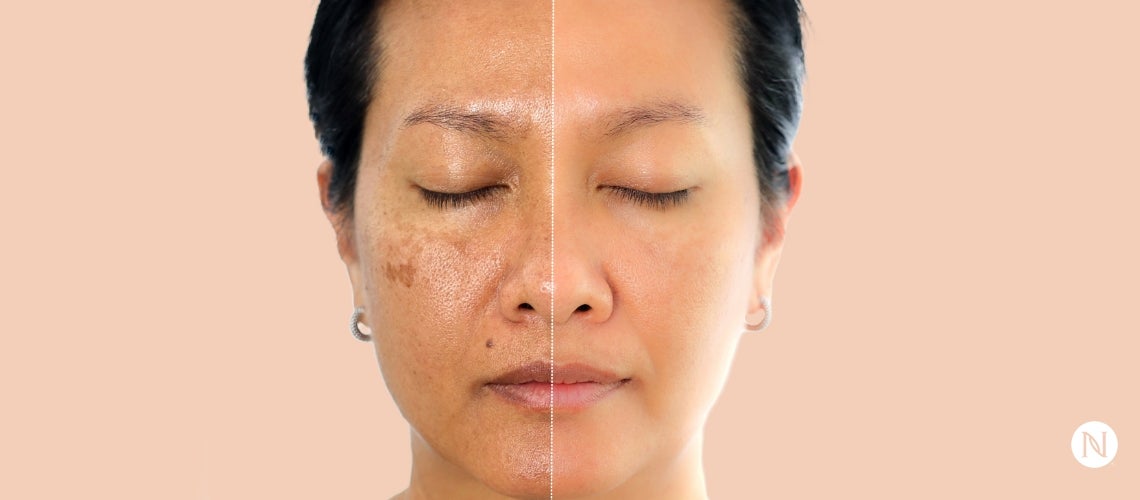
If you’ve noticed a flat, brown spot that showed up after a summer of sun and never left, you’re looking at a sunspot, also called a solar lentigo. It forms when your skin’s melanin clusters in one place as a defense response to UV exposure, and unlike a lot of skin concerns, it won’t just fade on its own once the season changes.
What are Sunspots?
Sunspots form when melanocytes, the cells responsible for your skin’s pigment, overproduce melanin in response to UV exposure. They show up most in areas that see the most sun over time- face, hands, shoulders- and they have a distinct look: an even outline and uniform color, unlike the softer, scattered pattern of freckles.
That distinction matters for one big reason: freckles fade when sun exposure stops. Sunspots don’t. Once they’ve formed, they’re staying put until something treats them.
Causes of Sunspots
Sunspots are mostly the result of cumulative sun exposure, not one bad day at the beach, but years of UV exposure adding up in the same areas of skin. Each exposure triggers a small burst of melanin production, and over time, that repeated response leaves permanent, concentrated pigment behind instead of fading back to normal.
Age plays a real role too. As skin gets older, cell turnover slows, and its ability to repair UV damage weakens, so the same amount of sun exposure that a 20-year-old’s skin bounces back from can leave a lasting mark on skin in its 40s or 50s.
Hormones can factor in as well. Shifts from pregnancy, birth control, or hormone therapy can make skin more reactive to UV exposure, which is part of why some people notice new spots appearing even when sun habits haven’t changed.
Prevention of Sunspots
Since sunspots build up from cumulative exposure and can be influenced by things like aging and hormonal shifts, prevention isn’t about one product; it’s about consistency layered with a few smart habits. Here’s what actually moves the needle:
- Make SPF a daily habit, not a summer one. UV exposure adds up even on cloudy days and in winter, which is exactly why sunspots often show up on skin that “hasn’t had that much sun” this year. Neora’s Age IQ Day Cream pairs antioxidant protection with a daily barrier against that everyday exposure.
- Add physical barriers when you can. Broad-brimmed hats, sunglasses, and UV-protective clothing pick up where sunscreen alone leaves off, especially during peak sun hours.
- Seek shade during peak hours. Limiting direct exposure between roughly 10am and 4pm meaningfully cuts your cumulative dose over time.
- Use ingredients that work preventively, not just after the fact. Vitamin C, found in Neora’s IllumaBoost, helps neutralize the oxidative stress that UV exposure causes before it turns into visible pigment, not just lighten spots that have already formed.
- Check your skin regularly, especially through hormonal shifts. Pregnancy, starting or stopping birth control, or beginning hormone therapy are all moments worth paying closer attention, since your skin’s sensitivity to sun exposure can change during those windows.
- Loop in a dermatologist. Skin type, history, and now hormonal factors all affect what prevention should look like for you; a professional can tailor that instead of you guessing.
- Support your skin from the inside too. A diet rich in antioxidants- think berries, leafy greens, colorful produce, along with staying well-hydrated- gives your skin more resilience against the oxidative stress UV exposure causes.
Treatments for Sunspots
Prevention only goes so far. Once a sunspot has formed, fading it takes a more targeted approach, and the right one depends on how much you’re looking to invest and how fast you want results.
At-home treatments work best as a slow, steady approach. Retinoids, a form of Vitamin A, speed up cell turnover, gradually buffing away the pigmented surface layer to reveal fresher skin underneath. Vitamin C serums work differently, providing antioxidant protection while also helping brighten existing discoloration with consistent use.
Professional treatments move faster, at a higher cost. Laser therapy targets pigment directly, breaking it up so your skin can clear it away. Microdermabrasion takes a gentler route, exfoliating away the outermost layer of skin to reduce the appearance of spots over repeated sessions.
Whichever route you take, the same rule applies: melanin doesn’t clear overnight, and skin needs real time to turn over and heal. Sticking with a treatment consistently matters more than which one you pick.
Your Next Steps Toward Prevention
Sunspots take years to form, so it makes sense that fading them takes real time too.
The good news is you now know exactly what’s driving them, cumulative sun exposure, aging, sometimes hormones, and exactly what to do about it, consistent daily protection paired with the right treatment if you’re already seeing spots.
That combination is what works. Not a single miracle product, not one great week of sunscreen, but showing up for your skin the same way, every day, long enough for it to show. Start with what you can control today, and let Neora’s skincare collection support you the rest of the way.
FAQ about Sunspots
Are certain skin types more prone to sunspots?
Yes. Fair skin has less melanin to begin with, which means less natural protection against UV radiation, but sunspots can develop on any skin type with enough sun exposure over time.
Can medications make sunspots more likely?
Yes, certain medications, including some antibiotics, hormone treatments, and anti-inflammatory drugs, can increase your skin’s sensitivity to sunlight. If you’re on any of these, extra sun protection is worth the effort.
Can sunspots form in winter?
Yes. UV rays pass through clouds and reflect off snow, so skin damage happens year-round, not just in summer. It’s part of why daily SPF matters even when the sun doesn’t feel strong.
Can pregnancy or hormonal changes cause new sunspots?
They can contribute, yes. Shifts from pregnancy, birth control, or hormone therapy can make skin more reactive to UV exposure, which is why some people notice new spots showing up even without a change in their sun habits.

