Morning Skincare Routine to Combat Hyperpigmentation

Hyperpigmentation can be one of the most frustrating skincare issues, especially when you’ve tried everything to get your skin back to an even tone. Dark spots, uneven skin tones, and discoloration can stem from various causes, including sun exposure, acne scars, and hormonal changes. But there’s good news! An effective morning skincare routine can target these issues, help you fade those dark spots, and prevent new ones from popping up!
Why a Morning Routine is Essential for Hyperpigmentation
Hyperpigmentation starts at the cellular level. When your skin senses UV exposure, inflammation, or injury, it triggers an enzyme called tyrosinase, which ramps up melanin production as a defense response. That’s your skin trying to protect itself, but the result is dark spots, uneven tone, and patches that can take months to fade on their own. Add hormonal shifts into the mix, and that melanin response can become even harder to control.
This is exactly why the order and consistency of your routine matter more than any single product. Morning skin is playing defense, working to prevent new pigmentation from forming while the sun and environment are actively working against it. Skip a step, or apply things in the wrong order, and you’re giving that tyrosinase response more room to win.
No routine fades hyperpigmentation overnight, skin cell turnover simply doesn’t move that fast. But a morning routine built around prevention, targeted treatment, and protection, done the same way every day, is what actually gets ahead of that melanin response instead of chasing it after the fact.
1. Start with Gentle Cleansing
Cleansing is where most hyperpigmentation routines quietly go wrong. A harsh, stripping cleanser doesn’t just leave skin feeling tight, it triggers the same inflammation response we just talked about, which means it can actually feed the melanin production you’re trying to calm down. The goal here isn’t just clean skin, it’s skin that isn’t fighting itself before the rest of your routine even starts.
Choose a gentle, pH-balanced cleanser, and look for calming ingredients like aloe or chamomile that support the skin barrier instead of stressing it.
To properly cleanse:
- Use lukewarm water; hot water aggravates inflammation and works against you.
- Massage the cleanser in for 30 to 60 seconds, no need to scrub.
- Rinse thoroughly and pat dry with a soft towel.
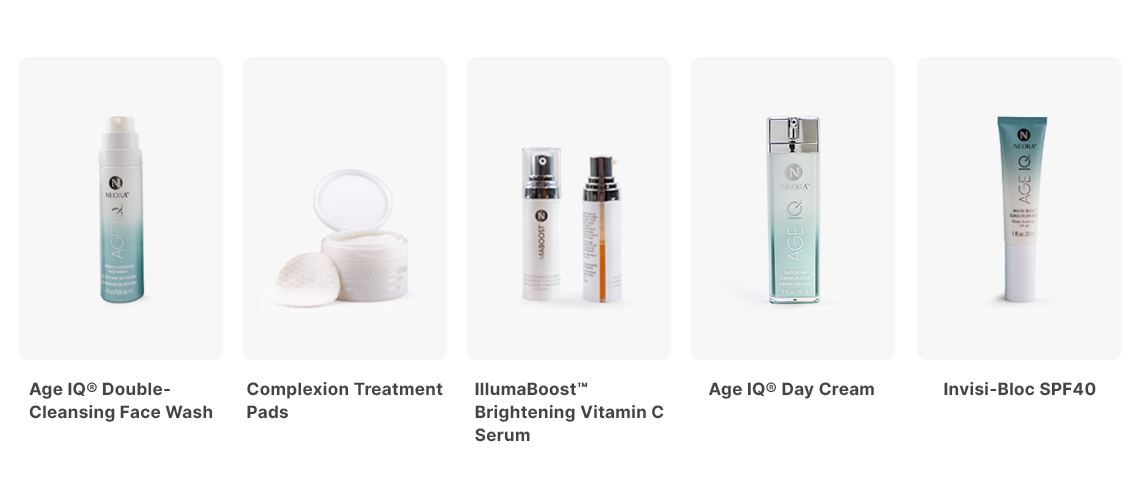
Neora’s Double-Cleansing Botanical Face Wash is built for exactly this: clean, calm skin that’s ready for treatment, not skin that’s already inflamed before you’ve even started.
2. Exfoliate 2-3 Times a Week
Exfoliation is where the balance we talked about really gets tested. Done right, it speeds up cell turnover and helps surface pigmentation fade faster. Done too often, it triggers the exact irritation response that feeds new dark spots, undoing the progress you’re trying to make.
That’s why chemical exfoliants, AHAs and BHAs, tend to work better here than physical scrubs. They remove dead skin cells gently and evenly instead of manually abrading the surface, which matters a lot when the skin you’re working on is already sensitive to inflammation. Two to three times a week is the sweet spot for most people, glycolic and lactic acid for general dark spot fading, salicylic acid if breakouts are part of what’s triggering your discoloration in the first place.
If acne-related marks are part of your hyperpigmentation, Neora’s Complexion Clearing Treatment Pads use salicylic acid specifically to target that combination, clearing congestion without over-stripping skin that’s already working hard to repair itself.
3. Apply Targeted Serums
This is where the routine actually goes on offense. Cleansing and exfoliating cleared the way, now it’s time to apply the ingredients doing the real work of interrupting that tyrosinase response and fading the pigment that’s already there.
- Vitamin C: A powerful antioxidant that helps fade existing dark spots while protecting skin from the environmental stressors, sun exposure and pollution among them, that trigger new discoloration in the first place.
- Niacinamide: Works differently than vitamin C, it directly inhibits melanin production at the source, which is why the two ingredients are often paired together rather than used as substitutes for one another.
Consider incorporating Neora’s IllumaBoost Brightening Vitamin C Serum into your routine! This product is packed with antioxidants and brightening ingredients designed to fade dark spots and even out your skin tone.
4. Moisturize to Maintain Balanced Skin
This step is easy to skip, and skipping it quietly undercuts everything you just applied. Active ingredients like vitamin C and niacinamide need a healthy, hydrated skin barrier to actually absorb and do their job, apply them onto dry, compromised skin, and you’re losing a meaningful amount of what you just paid for in your serum.
A damaged barrier, whether from sun exposure, previous breakouts, or over-exfoliating, also struggles to regulate inflammation, which loops right back to the melanin response we started with. Moisturizing isn’t the passive step here, it’s what lets everything before it actually work.
Match your moisturizer to your skin type, lightweight for oily skin, richer for dry skin, but don’t skip it because your skin feels fine on the surface. Barrier damage isn’t always visible until it shows up as more discoloration later.
5. Sun Protection is a Non-Negotiable
This is the step that decides whether everything else in this routine actually holds. UV exposure is the single biggest trigger for the tyrosinase response we talked about at the very start, which means skipping sunscreen doesn’t just risk new damage, it can undo the fading you just worked for with your serum and actively feed the same discoloration you’re trying to treat.
Apply a broad-spectrum sunscreen with at least SPF 30 every morning, no exceptions, and reapply every two hours if you’re spending time outdoors.
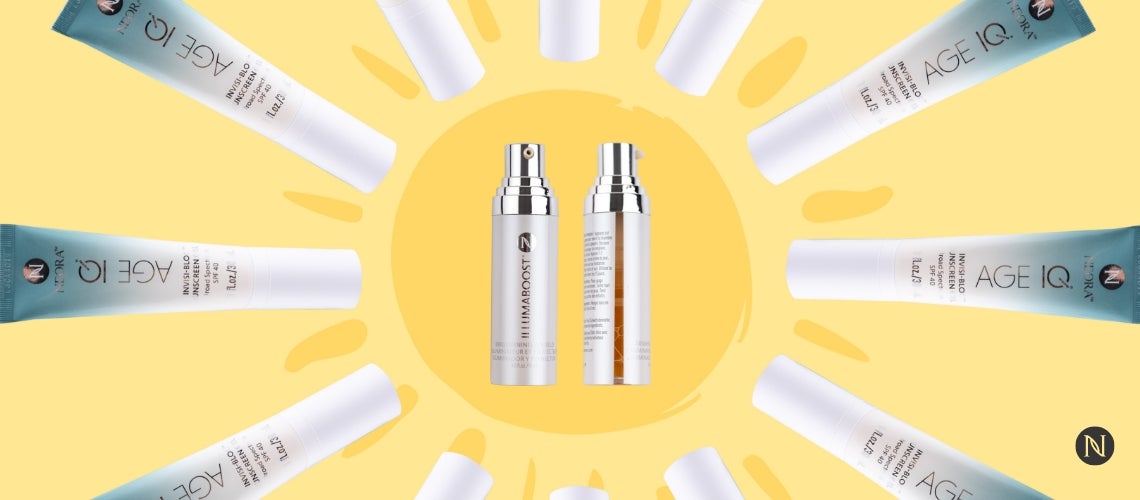
Neora’s Invisi-Bloc Sunscreen SPF 40 is built for exactly this kind of daily, non-negotiable use, lightweight, wears well under makeup, and easy enough to actually stick with, which matters more than any SPF number if it means you skip it less.
Additional Tips for Preventing Dark Spots
Your skin’s defense against UV-triggered pigmentation doesn’t stop at what you apply topically. Antioxidant-rich foods, think berries, leafy greens, and colorful produce, support the same protective response you’re building with vitamin C in your serum, just from the inside out. And on days you know you’ll be in direct sun for extended periods, a hat and some shade during peak hours (10 a.m. to 4 p.m.) simply to take pressure off the sunscreen doing the heavy lifting.
Patience and Consistency
Hyperpigmentation didn’t show up overnight, and it won’t fade overnight either, that’s just how skin cell turnover works. But now you know why each step matters: cleansing that doesn’t inflame, exfoliation that doesn’t overdo it, actives that interrupt melanin production, hydration that lets those actives work, and sun protection that keeps the whole cycle from restarting. Skip the sequence and you’re fighting yourself. Follow it consistently, and you’re finally working with your skin instead of against it.
That’s the real difference between a routine that fades dark spots and one that just manages them.

