Vitamin C for Dark Spots: What Actually Works


Dark spots don’t just show up randomly, they’re your skin’s response to something specific: sun exposure, a healed breakout, hormonal shifts, or years of cumulative UV damage all triggering the same underlying process, excess melanin production. Vitamin C is one of the more effective ingredients for interrupting that process, but here’s what most articles on this topic skip: not all Vitamin C actually works the same way, and the difference between a serum that fades dark spots and one that just sits on a shelf oxidizing usually comes down to concentration and form.
What Actually Causes Hyperpigmentation
Melanin is the pigment responsible for skin color, and hyperpigmentation happens when your skin produces more of it than it needs, concentrated in one spot instead of evenly. What triggers that overproduction varies, and knowing which one applies to you actually matters for treatment.
Sun exposure is the most common cause: UV rays prompt melanin production as a defense mechanism, and sunspots are the visible result. Hormonal shifts, pregnancy, birth control, and other hormone changes, can trigger melasma, a distinct pattern of darker patches that behaves differently than sun-related spots and often responds more slowly to treatment. Skin trauma is a third pathway: a healed breakout or minor injury can leave post-inflammatory hyperpigmentation behind as skin overcorrects during repair. And with age, years of accumulated sun exposure combine with slower cell turnover, making spots that were already forming more visible and slower to fade.
How Hyperpigmentation Affects Different Skin Types
Hyperpigmentation affects every skin tone, but it shows up and behaves differently depending on your skin’s natural pigmentation, which matters for both what to expect and how to treat it.
On fair skin, hyperpigmentation typically appears as freckling or reddish-brown marks, visible against lighter skin, but often responsive to treatment relatively quickly. Medium skin tones tend to develop brown or gray-toned spots that can be more persistent, sometimes taking longer to fade even with consistent treatment. On deeper skin tones, hyperpigmentation often appears as darker brown or black patches, and because melanin-producing cells are more active to begin with, these spots can take meaningfully longer to fade, and are also more prone to a specific risk: any irritation, and even some treatments themselves, triggering additional pigmentation in response, a separate issue called post-inflammatory hyperpigmentation on top of what you’re already treating.
That’s why a one-size-fits-all approach doesn’t really work here. What treats sun-triggered spots on fair skin well isn’t necessarily the gentlest, most effective path for deeper skin tones managing both existing spots and the risk of new ones forming from treatment itself.
Vitamin C’s Role in Reducing Dark Spots
Vitamin C works on hyperpigmentation two ways at once, and understanding both is what actually explains why it’s effective..
First, as an antioxidant, it neutralizes free radicals from UV exposure and pollution before they can trigger the skin’s stress response, the same response that ramps up melanin production in the first place. That makes it genuinely preventive, not just something you apply after spots have already formed.
Second, and more directly relevant to fading spots you already have, Vitamin C interferes with tyrosinase, the enzyme responsible for melanin production. Slowing tyrosinase activity is the same mechanism behind several other brightening ingredients, which is why Vitamin C is often paired with, rather than used instead of, something like niacinamide, a comparison worth getting into.
Neora’s IllumaBoost uses Vitamin C in a stabilized form specifically because of the mechanism above, unstable Vitamin C degrades before it can meaningfully interfere with tyrosinase at all, which is exactly the kind of practical detail that matters more than the concentration number on the label.
Benefits of Using Vitamin C for Skin
Beyond fading existing spots, Vitamin C supports collagen production, which helps with firmness over time, and it’s worth being clear about one common misconception: Vitamin C doesn’t bleach skin. It works by slowing new melanin production and helping fade what’s already there, which evens out tone rather than lightening skin overall, an important distinction, especially for anyone with a deeper skin tone concerned about uneven results.
How to Actually Use Vitamin C
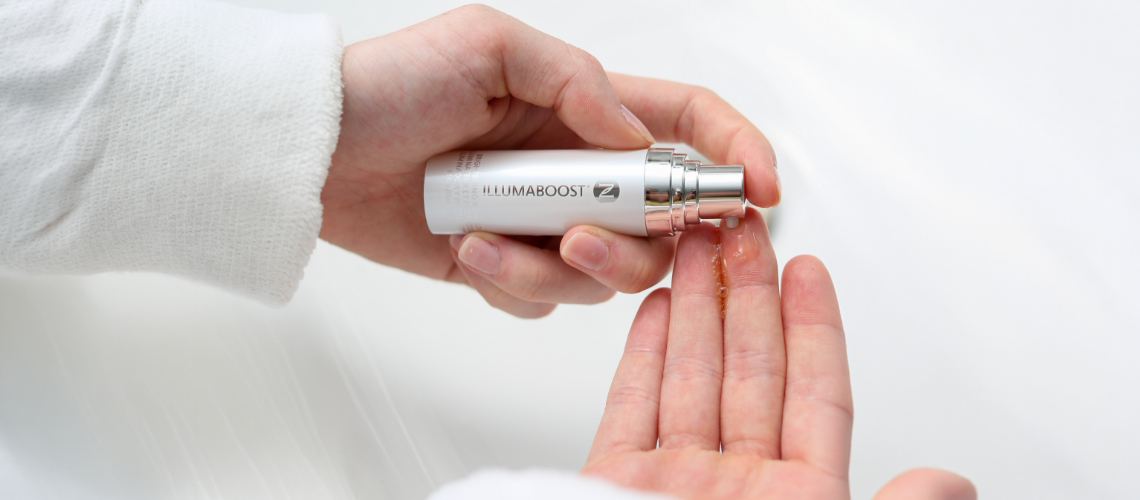
Vitamin C shows up in serums, moisturizers, masks, and toners, but serums are generally the most effective, formulated to deliver a higher concentration directly to skin rather than being diluted across a moisturizing base.
L-ascorbic acid is the most potent and well-researched form, most of the research showing real results for fading dark spots uses concentrations in the 10-20% range. But it’s also the least stable form, it oxidizes when exposed to light, air, and water, which is why packaging and storage actually matter here. A serum that’s turned yellow or brown has likely already broken down and lost much of its effectiveness, regardless of what the label says.
Apply Vitamin C to clean, dry skin in the morning, before moisturizer and sunscreen, so it can work throughout the day. If you’re new to it, start around 10% and build up, higher concentrations can cause irritation, especially for sensitive skin.
A simple routine: cleanse, apply your Vitamin C serum, like Neora’s IllumaBoost, moisturize, then apply sunscreen. Because visible results typically take several weeks of consistent use; this isn’t a fast fix, but it is a reliable one.
Tips for Maximizing Vitamin C’s Effects
Vitamin C isn’t the only ingredient that targets hyperpigmentation, and it’s worth knowing how it compares. Niacinamide works through a different mechanism, it interrupts the transfer of melanin to skin cells rather than blocking production at the source, and it’s generally gentler, which makes it a good option for sensitive skin or as a nighttime pairing alongside a morning Vitamin C routine. They’re not competitors, they’re complementary, using both often works better than either alone.
The other non-negotiable: sunscreen. Vitamin C offers some antioxidant protection against UV damage, but it’s not a substitute for SPF. Apply Vitamin C first, let it absorb, then follow with broad-spectrum sunscreen, together they prevent new spots from forming while Vitamin C fades the ones you already have.
Diet and hydration support the process too, antioxidant-rich foods and adequate water intake help skin function well overall, though they’re a supporting habit, not a replacement for the actual routine doing the work.
Embracing the Vitamin C Revolution
Vitamin C works on hyperpigmentation through two real mechanisms, preventing new spots and fading existing ones, but only if you’re using the right concentration, in a formula that hasn’t already oxidized, paired with sunscreen. That’s the difference between Vitamin C that actually does something and a serum that just sits in your routine.
If you’re managing hyperpigmentation more broadly, understanding what’s actually causing your specific spots and building a full morning routine around it will get you further than any single ingredient on its own. Neora’s IllumaBoost is built around the stabilized Vitamin C we’ve been talking about, formulated to actually deliver what the ingredient promises.

